
The Student Paramedic Survival Guide
Student Blog by Lu Francis
Have you ever revised between night shifts, had an OSCE induced meltdown, or looked at your slides as if you're playing Pictionary? Welcome to the club!
Being a student paramedic is a balancing act, and it's easy to feel like you've fallen behind. I'm Lu, a second‑year student paramedic at Keele University, and I've been sharing my journey online for about a year. It's been lovely to connect with student paramedics across the country, especially when people message me saying I "seem so organised" and "put together".
I can absolutely promise you... I'm not.
I've just spent years in the academic trenches and finally found a method that works within the madness of university life. We don't all have hours to sit in the library, so finding high‑quality, flexible study resources is so important. This is the survival guide I wish I'd had in my first year.
One of the first things that hit me when I started Uni was a brutal case of "comparisonitis". You sit in your lecture and suddenly everyone seems more smart, confident, organised, and already clued up on everything. Meanwhile, I was struggling to remember what week it was... Some people were revising 24/7, others seemed to understand everything instantly. I felt like I was permanently two steps behind.
People kept telling me that "everyone learns at a different pace", but that felt like motivational fluff. It took time for me to see that it's true and that the real challenge isn't keeping up with everyone else, it's figuring out what works for you.
These tips come from what's helped me most, if something doesn't click, don't panic. Take the ideas, adapt them, and build routines that fit your brain, schedule, and life.
1. Choose Consistency instead of Intensity
Being on a fast‑paced degree while trying to manage the rest of your life is... a lot. And that's before placements even enter the conversation. The idea of sitting down for a four‑hour study session sounds alright in theory, but it's just not sustainable.
What is sustainable is the "little and often" approach. I try to think of it as improving by 1% a day, tiny, manageable, and surprisingly powerful. Those small pockets of revision add up far quicker than you think, and they don't drain you the way long study sessions do.
Flashcards and apps have been lifesavers for this. Creating my own flashcards helps me consolidate content but using apps like ParaPass have taken it to another level. Quick quizzes, and case studies, all on my phone mean I can get my 1% done anywhere: on the bus, on a break, waiting for a lecture to start. No laptop, notebooks, or faff. The best part? I can log it all as CPD in ParaFolio, which ticks another job off my to do list!
2. Get creative with your revision.
Anatomy & physiology, and pharmacology are some of the most feared modules for student paramedics, and I get it. They're content‑heavy, abstract, and can be hard to visualise. A lot of us learn best through application, that's why we chose a practical degree, but these topics don't always give you that immediately.
Pharmacology has grown on me recently, and I credit that to Essential Pharmacology in Paramedic Practice. It gives you the theory, but more importantly, it uses case studies to help you contextualise it, which makes a massive difference. Still, A&P and pharm can feel slow if you only study them in a traditional way.
This is where you need to get creative.
If the theory feels flat, turn it into something you can see, hear, or interact with. I once made a video series where I turned ECG rhythms into how they would sound on guitar, because that's how my brain made sense of the patterns.
Was it chaotic? Yes. Did it work? Absolutely! I've also shown up to our A&P study group sessions with arts and crafts activities that I've made from the content!
You could:
- Draw diagrams.
- Build flowcharts.
- Use colours.
- Make up stories.
- Turn the cardiac cycle into a comic strip if you want to.
Anything that helps you understand is worthwhile, learning doesn't have to be dry to be effective.
3. Make an OSCE prep routine!
Everyone seems to fear OSCEs, and I remember hearing older students' horror stories way before I ever stepped into an exam room. I'd be lying if I said there haven't been some nervous tears before OSCEs, but somehow, I always manage to pull it out of the bag. And honestly? That's because of the study habits I built long before exam day.
My OSCE Study Routine:
- Cover a clinical skill in classes.
- I turn the skill into a flowchart. I use the Ambulance Care Clinical Skills book for this because it breaks everything down and makes it easy to convert into a visual routine.
- Practice a bunch! Repetition helps so much with building fluency with skills, my friends and teddies have been victims of many a practice session.
As soon as you see a skill as a routine or process and you practise it enough times, it becomes muscle memory, which is kind of what you need in an OSCE.
If flowcharts aren't your thing, or you're short on time, the supplementary checklist book is brilliant. It lays out the processes for you, so all you need to do is practice and build fluency. The more familiar the routine becomes, the less your nerves can shake it. A solid study routine gives you a foundation that helps you stay calm enough to follow the process you already know.
Conclusion
Providing a good summary and linking back to the hook can help round out an engaging blog post.
The truth is nobody has it all together. We're all just trying to revise on the bus, survive OSCEs, and pretend we understand the renal system. Every student paramedic feels the chaos, but the trick is learning to work with it.
By using reliable resources that are designed with students in mind, the initial guesswork gets taken out of your revision. Personally, I have always used resources from Class Professional, I know they will always be high quality, and I place a lot of trust in them when planning my revision. That means there's more time for me to focus on the important stuff!
A little consistency, creativity, and a study routine that fits your life can change everything. You don't need to be the most organised person in the room; you just need a system that keeps you moving forward.
Because once you stop comparing yourself to everyone else and start studying in a way that suits you, everything becomes so much more manageable and a lot more enjoyable.
If you've ever had an OSCE meltdown or stared blankly at JRCALC, consider this survival guide your reminder that you're not the only one navigating the madness.
Lu Francis is a third‑year Keele MSci Paramedic Science student aspiring to become a research paramedic. She shares her studies and journey on social media, connecting with like‑minded learners. She was inspired to pursue paramedicine after seeing the compassionate care paramedics provided to her mum throughout her health challenges.
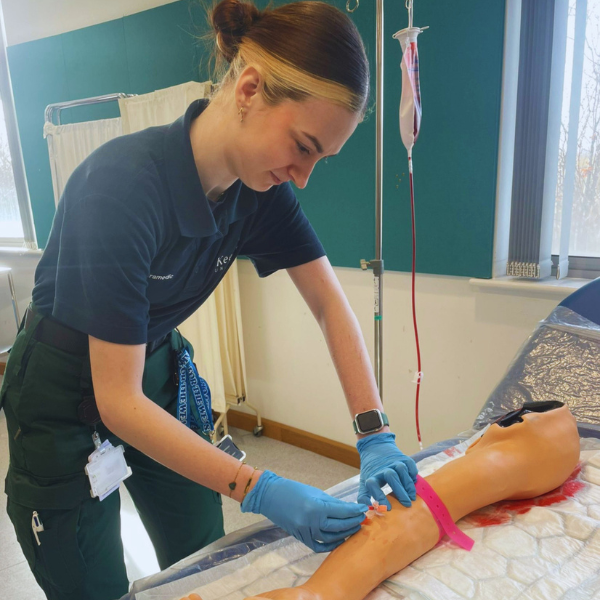
More articles in this category:
- Your guide to online etiquette
- Why Should Critical Thinking be on your Radar?
- How to Present with Confidence and Impact
Suggested reading
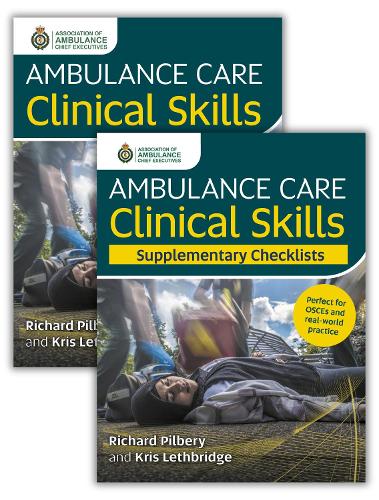
Ambulance Care Clinical Skills and Supplementary Checklists Bundle
Paperback
Pilbery, Richard; Lethbridge, Kris
WAS £37.99 SAVE £5.70
£32.29
View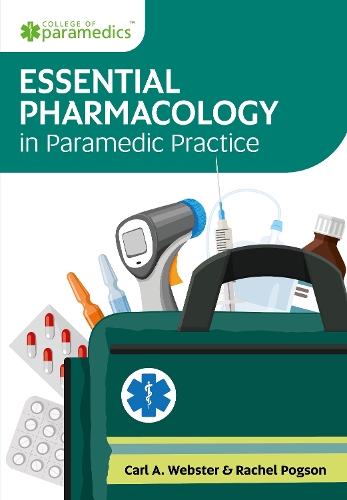
Essential Pharmacology in Paramedic Practice
Paperback
Webster, Carl; Pogson, Rachel
WAS £36.99 SAVE £5.55
£31.44
View